Showing posts with label Research. Show all posts
Showing posts with label Research. Show all posts
Saturday, 22 April 2017

Audience Expectations from Genre
We asked some people to answer the following survey to get a better understanding of audience expectations of black comedy.
1. What themes would you expect from a black comedy film?
2. What settings would you expect in a black comedy film?
3. What type of main character would you expect from a black comedy film?
First participant:
1. Dark themes such as death, crime murder e.t.c but juxtaposed with tongue in cheek humour - not necessarily laugh out loud.
2. Can be applied to any setting I would say.
3. Again could be anything but normally I would imagine one main character who the audience is aligned with, for example in 50/50.
Second participant:
1, Crime, gruesome gory deaths and injuries, cults,mysteries
2. Quiet town/village/small town/countryside
3. Funny, ordinary person, mundane job
Third participant:
1. Perhaps it would be about the protagonist's situation and emotions, mainly sad and pessimistic but humorous. So themes could be loss/death or the mundanities of everyday life.
2. A setting that may not seem to offer much humour but allows the characters to create it. Like a small/insignificant town or a funeral.
3. Someone unfulfilled with dull yet funny friends or maybe an outsider or loner, riddled with cynicism so a lot of humour would come from their sarcasm and pessimism.
Fourth participant:
1. Inappropriate or dark subjects such as death, illness or corruption or very disturbing situations. But managed to make it humorous.
2. Based in a dull setting like a town or somewhere there is not much modernism.
3. Someone pessimistic and satire - won't have many aspirations in life. Or they could be very self centred, not caring what comes their way. Would make audience feel hate towards them or feel very sympathetic towards them.
1. What themes would you expect from a black comedy film?
2. What settings would you expect in a black comedy film?
3. What type of main character would you expect from a black comedy film?
First participant:
1. Dark themes such as death, crime murder e.t.c but juxtaposed with tongue in cheek humour - not necessarily laugh out loud.
2. Can be applied to any setting I would say.
3. Again could be anything but normally I would imagine one main character who the audience is aligned with, for example in 50/50.
Second participant:
1, Crime, gruesome gory deaths and injuries, cults,mysteries
2. Quiet town/village/small town/countryside
3. Funny, ordinary person, mundane job
Third participant:
1. Perhaps it would be about the protagonist's situation and emotions, mainly sad and pessimistic but humorous. So themes could be loss/death or the mundanities of everyday life.
2. A setting that may not seem to offer much humour but allows the characters to create it. Like a small/insignificant town or a funeral.
3. Someone unfulfilled with dull yet funny friends or maybe an outsider or loner, riddled with cynicism so a lot of humour would come from their sarcasm and pessimism.
Fourth participant:
1. Inappropriate or dark subjects such as death, illness or corruption or very disturbing situations. But managed to make it humorous.
2. Based in a dull setting like a town or somewhere there is not much modernism.
3. Someone pessimistic and satire - won't have many aspirations in life. Or they could be very self centred, not caring what comes their way. Would make audience feel hate towards them or feel very sympathetic towards them.
Friday, 21 April 2017
Iconography
Iconography in media is an important aspect of genre. Certain objects are expected to be seen on screen when a certain genre is set for a film.
 Iconography in the Comedy Genre:
- Bright colour palette on screen, goes with high key lighting and the light hearted background of the genre.
- Slapstick comedy uses props such as bats and water pistols.
- Spoken jokes as well as non-verbal looks of reaction towards the camera, breaking the fourth wall between audience and character.
- Iconography usually conforms to the theme of the film. For example, a film about rebellious teenagers, props used would be empty bottles of alcohol or used condoms to add comic effect.

Iconography in the Drama Genre:
- Real life issues and problems help the audience relate to the characters and rest of the film, making the received moral even greater. It also increases their sympathy towards the characters involved, meaning they are more involved in the events and narrative.
 - Drama films can also occur in different time periods, for example the 1940s during World War 2. Iconography for this specific time/war drama would be props such as gas masks, planes, camouflage and uniform.
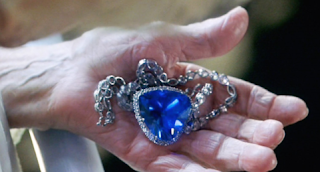
- Props in Drama films usually have large meaning to the characters and narrative story line as well as the audience. An example of this would be the significance of the blue diamond necklace in 'Titanic' the film, as this is solely the purpose for the team going out to search for the sunken boat in the first place.
 Iconography in the Comedy Genre:
- Bright colour palette on screen, goes with high key lighting and the light hearted background of the genre.
- Slapstick comedy uses props such as bats and water pistols.
- Spoken jokes as well as non-verbal looks of reaction towards the camera, breaking the fourth wall between audience and character.
- Iconography usually conforms to the theme of the film. For example, a film about rebellious teenagers, props used would be empty bottles of alcohol or used condoms to add comic effect.

- Real life issues and problems help the audience relate to the characters and rest of the film, making the received moral even greater. It also increases their sympathy towards the characters involved, meaning they are more involved in the events and narrative.
 - Drama films can also occur in different time periods, for example the 1940s during World War 2. Iconography for this specific time/war drama would be props such as gas masks, planes, camouflage and uniform.
- Props in Drama films usually have large meaning to the characters and narrative story line as well as the audience. An example of this would be the significance of the blue diamond necklace in 'Titanic' the film, as this is solely the purpose for the team going out to search for the sunken boat in the first place.

Thursday, 20 April 2017
Saturday, 15 April 2017
Iconic Directors of Comedy Drama
Wes Anderson
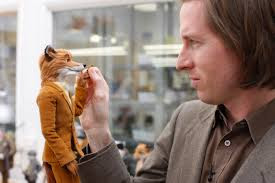 Wes Anderson is an American film directer, producer, screenwriter and actor. His films are most known for their distinctive visual and narrative style.
Some of his most iconic and well-known films are those such as 'Moonrise Kingdom' released in 2012, 'The Grand Budapest Hotel' released in 2014 and 'Fantastic Mr. Fox' released in 2009.
Anderson's films are mostly comedies that deal with dark subject, so are more black-comedy or comedy drama. Some of these themes can loss of innocence, death or grief. We plan to use this type of genre in our film opening and combat the themes of drugs and rebellion amongst teenagers and the harsh effects these have.
 Director decisions that he makes usually spark a critical reaction and discussions after his films are viewed. Anderson uses stylistic shot choices such as flat space camera moves, snap-zooms and slow motion walking shots. As well as this he deliberately chooses a limited colour palette which create aesthetically pleasing frames.
Over the years, Anderson has won many awards for his pleasing and distinctive films. For example, 'Best New Filmmaker' at the MTV Awards in 1996 and 'Best Comedy' at the Critic's Choice Movie Awards in 2015, by which he was also nominated for best director, picture and original screenplay.
 Wes Anderson is an American film directer, producer, screenwriter and actor. His films are most known for their distinctive visual and narrative style.
Some of his most iconic and well-known films are those such as 'Moonrise Kingdom' released in 2012, 'The Grand Budapest Hotel' released in 2014 and 'Fantastic Mr. Fox' released in 2009.
Anderson's films are mostly comedies that deal with dark subject, so are more black-comedy or comedy drama. Some of these themes can loss of innocence, death or grief. We plan to use this type of genre in our film opening and combat the themes of drugs and rebellion amongst teenagers and the harsh effects these have.

Over the years, Anderson has won many awards for his pleasing and distinctive films. For example, 'Best New Filmmaker' at the MTV Awards in 1996 and 'Best Comedy' at the Critic's Choice Movie Awards in 2015, by which he was also nominated for best director, picture and original screenplay.
Saturday, 25 March 2017
Technology Used and Problems Faced
For the original storyboard:
Over the course of creating our film opening, we have learnt a lot about the technologies we used to construct our product. Originally, we used the Canon DSLR camera and we found that by touching the screen of the camera it focused on specific object. However, we struggled to get the camera to focus on some zoomed in shots and when we filmed fast shots.

For the improved storyboard:
As result of our focusing struggle and unsteadiness with the Canon DSLR camera, we decided to use an iPhone 7 camera. It is of similar quality and we practised a few test shots to see if it was appropriate for are extreme close up and fast movement shots.

Friday, 17 March 2017
Sunday, 26 February 2017
Health and Safety Risks
As a precaution, we had to think and evaluate all of the possible hazard during filming in order to prevent them from occuring and harming any one or any equipment.

Tuesday, 31 January 2017
Film Rating

Drug use is shown however it is not promoting or encouraging it as the film is about how they affect the characters life.
As the genre is a comedy drama, we would continue the use of strong language as this can be considered comical in use, as well as showing the reality of teenagers and their lives.
Our opening does not contain any sex however the rest of the film would have sexual scenes as this would fit into the life of a teenager as well as her own accidents or events due to the drugs and alcohol that go along with the theme.
Thursday, 1 December 2016
Film Opening Analysis
The opening shot of a film is extremely important as the director purposefully chooses to give off a certain vibe or impression to the audience to depict the genre of the film itself. The viewer/s can observe the first few seconds of an opening and notice symbols that may have some significance later on which can be linked back and create a wider, more obvious narrative and sense of character.
Whiplash - 2014
Below is the very first shot of the film, directed by Damien Chazelle, whereby the main character, Andrew, can be easily seen. The director will have positioned him and the drum kit in the centre of the key and filler lights, showing an obvious dominance. Also, he can be seen in the right third of the shot, showing that he is an important character throughout the film as well as the camera zooming in throughout, never losing focus on Andrew or the drum kit.
The boy is alone, which the director has chosen to do in order to portray the character as independent and hard working, but also as being a lonely person who does not speak much, which is also true within the film. This also brings about the theme of dreams as the blur of the drum stick in the shot below, proves that he is moving his hands quickly, showing a skill on the drums that he has, as well as a passion for what he is doing.

Breakfast at Tiffany's - 1961
The shot below is one of the first that can be seen in the film directed by Blake Edwards. It features the main character, and well known actress, Audrey Hepburn, who has been placed once again in the left third of the scene to portray dominance and importance of character. The director will also have chosen to do this as it allowed room for negative space where the credits can be edited into.
The lighting is very obviously high key as she is outside, setting the genre of romantic comedy, however still realistic drama, as it seems light hearted and more natural. The placing of the character in front of a shop window, as well as a very highly sophisticated outfit, hair, makeup and props, demonstrate the extroverted persona of her which helps the audience with a sense of the events to occur later on. She is also alone, showing her independence as she gets into her own taxi after exiting a building the night after a bad date, which is revealed to the audience later on.

Juno - 2007
The shot below is the first seen in the dramatic teen romance film, Juno by director Jason Reitman. This appears immediately before the opening credits whereby the main character is shown thoroughly.
The font of the text shown is very cartoon-like, giving the audience a sense of the age of Juno, who is sixteen, however the contrast of the long shot including a house, portrays the fact that she is unexpectedly pregnant and having to grow up and mature faster than that of a normal teenager.
Juno can be seen in the bottom left corner of the long shot, and the director has chosen to have her wearing loose fitting clothes, giving off the sense that she is either a calm character or that she is lazy. Which can both be equally seen in the character throughout the film.

Wednesday, 16 November 2016

Tuesday, 8 November 2016
Examining Codes and Conventions of Film Openings
Lesson - 12th October 2016
Throughout this lesson, we individually analysed three famous film openings from different genres including horror, action and romantic comedy. The media texts we examined were;
Throughout this lesson, we individually analysed three famous film openings from different genres including horror, action and romantic comedy. The media texts we examined were;
- Halloween, 1978
- Amelie, 2001
- Trainspotting, 1996
We considered how the use of different lighting and sound affected tension as well as the audience response to character introductions and genre justification.
Individual Work
We also all went on to find our own film openings individually:


After viewing the opening for Halloween, I learnt that directors of horror films choose to use sudden, non-diegetic sound to emphasise an oncoming danger or event. In this example, John Carpenter, the director of Halloween, uses a high pitch, sharp strings to infer a warning to the audience and also to assume the genre.
All films within the genre of horror use similar techniques in mise-en-scene such as, a clown costume or the knife held by the boy. As well as this, the detached house adds to the sense of vulnerability, seen in many horror films.
Amelie (2001)


After analysis of the sound and tension tracker for Amelie, I noticed that the genre of romance/drama can easily be depicted via the intense shots and both diegetic and non-diegetic sounds of the wine glass and the vibrations when Amelie's hands are around her ears.
This direct way of portraying genre can be done within the mise-en-scene of the opening using both the props and voiceover, giving a clear french vibe to the film which also emphasises the setting.
Trainspotting (1996)

 After analysis of the trainspotting film opening from 1996, I noticed that the social realism genre was represented through the use of sound and cinematography.
 The sound used was an upbeat, youthful track (Lust for Life by Iggy Pop) that represented the young adults and the fast pace of the scene. The camera angles were all very close up and it featured some over the shoulder shots from a front angle, making the shot more personal and stereotypical of the age group shown.
Woman in Black (2012)


 During my individual work, I chose to analyse the opening of Woman in Black and noticed that similarly to Halloween it had minimal sound other than the occasional chimes. The tension also seemed to rise as the opening went on which is shown through techniques in the cinematography as the director used extreme close ups and slow motion when one of the young girls steps on the head of a doll, which is part of the mise-en-scene.


After choosing and viewing this film also for my individual work, I noticed that the comedy drama genre is very easy to depict from just the tension in the opening scenes.
The mise-en-scene used gives an immediate sense of character and story line within the first few minutes, creating a strong sense of character that can be continued throughout the film.
- Woman In Black, 2012
- Little Miss Sunshine, 2006
For these two, I recorded trackers and commented on the tension/content and sound.
Halloween (1978)


After viewing the opening for Halloween, I learnt that directors of horror films choose to use sudden, non-diegetic sound to emphasise an oncoming danger or event. In this example, John Carpenter, the director of Halloween, uses a high pitch, sharp strings to infer a warning to the audience and also to assume the genre.
All films within the genre of horror use similar techniques in mise-en-scene such as, a clown costume or the knife held by the boy. As well as this, the detached house adds to the sense of vulnerability, seen in many horror films.


After analysis of the sound and tension tracker for Amelie, I noticed that the genre of romance/drama can easily be depicted via the intense shots and both diegetic and non-diegetic sounds of the wine glass and the vibrations when Amelie's hands are around her ears.
This direct way of portraying genre can be done within the mise-en-scene of the opening using both the props and voiceover, giving a clear french vibe to the film which also emphasises the setting.
Trainspotting (1996)
 The sound used was an upbeat, youthful track (Lust for Life by Iggy Pop) that represented the young adults and the fast pace of the scene. The camera angles were all very close up and it featured some over the shoulder shots from a front angle, making the shot more personal and stereotypical of the age group shown.
Woman in Black (2012)


 During my individual work, I chose to analyse the opening of Woman in Black and noticed that similarly to Halloween it had minimal sound other than the occasional chimes. The tension also seemed to rise as the opening went on which is shown through techniques in the cinematography as the director used extreme close ups and slow motion when one of the young girls steps on the head of a doll, which is part of the mise-en-scene.
Little Miss Sunshine (2006)


After choosing and viewing this film also for my individual work, I noticed that the comedy drama genre is very easy to depict from just the tension in the opening scenes.
The mise-en-scene used gives an immediate sense of character and story line within the first few minutes, creating a strong sense of character that can be continued throughout the film.
Subscribe to:
Posts (Atom)